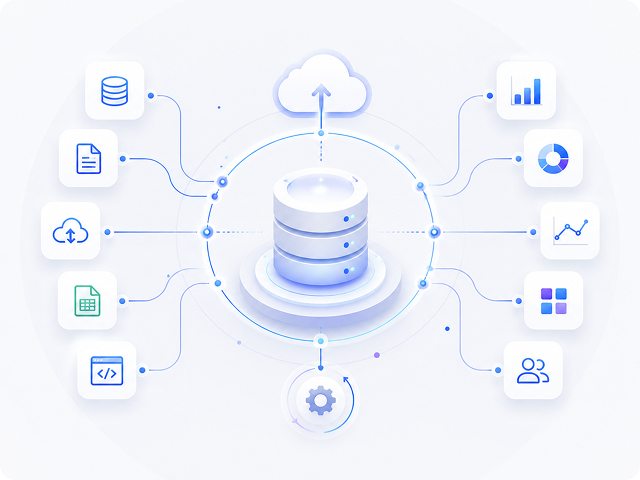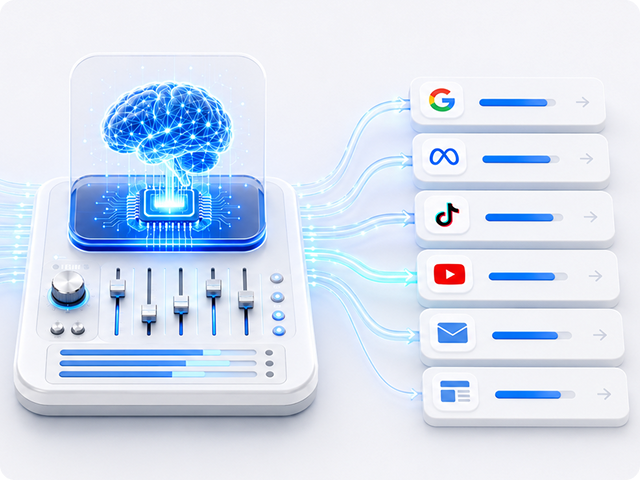









Why does the development of a data platform never end? And why is that good news?
⏱️ Reading time: approx. 6–8 minutes
Many business leaders and IT directors treat the implementation of a data warehouse or a modern lakehouse architecture as a project with a clearly defined beginning and end. Once the first integrations, data models, and dashboards are up and running, it may seem that the most important part of the work has been completed.
In practice, however, things work differently. Modern analytics infrastructure evolves together with the organization. Business needs change, new data sources, systems, and processes emerge, bringing new requirements for data quality, security, and access to information.
That is why data platform development is not a one-off project, but a continuous and iterative process. This applies to both on-premises environments and cloud solutions. The platform needs to keep pace with the organization: integrating new sources, organizing data, ensuring its quality, and preparing the environment for increasingly advanced analytics, machine learning, and AI.
This is particularly important for medium-sized and large organizations that want to make decisions based on consistent data and systematically develop their analytics capabilities.
Why is Data Management platform development a process, not a project?
A well-designed data platform often starts with a limited scope or an MVP (Minimum Viable Product). The goal is to deliver initial business value quickly, without immediately building a solution that covers the entire organization. The problem is that the business does not stand still.
Organizational goals change, new products and systems emerge, the number of users increases, and the volume of processed information grows. New reporting and analytics needs also arise. If the platform does not evolve together with the organization, workarounds gradually start to appear. Marketing creates its own spreadsheet reports, finance maintains additional reporting files, and individual departments begin using different definitions of the same metrics.
As a result, data silos start to reappear, even though reducing them was one of the original goals of the project. Data platform development should therefore be approached iteratively. Building the foundations is only the first stage. The next steps include expanding integrations, data models, quality mechanisms, the semantic layer, security, and analytics tools.
The platform evolves together with the organization’s needs.
Stages of Data Platform and Data Lakes evolution
There is no single universal model for data platform development. Organizations start at different levels of maturity and have different priorities. However, several areas tend to emerge as analytics environments evolve.
At first, companies usually focus on organizing their most important data and building the core infrastructure. This is followed by additional integrations, standardization of data models, process automation, and quality control mechanisms.
Over time, the platform begins to support more teams and use cases, ranging from traditional reporting to predictive analytics, machine learning, and solutions based on generative AI. The entire process is iterative. Instead of a one-off revolution, the organization develops its environment step by step, adapting its architecture, tools, and capabilities to current needs.
1. Integrating Additional Data Sources
At the beginning, the platform usually incorporates systems that are critical to the company’s operations, such as ERP, CRM, an e-commerce platform, or a financial and accounting system.
Over time, the scope expands.
The organization wants to better understand the entire customer journey, analyze marketing activities, operational processes, or application user behavior.
As a result, additional sources are connected to the platform:
- mobile applications,
- marketing systems,
- HR systems,
- sales tools,
- logistics systems,
- data from devices and machines,
- logs,
- documents and other unstructured data.
Each additional source increases analytics capabilities, but at the same time requires the right approach to data integration, transformation, monitoring, and quality.
As scale increases, well-designed ETL/ELT processes, pipeline automation, and data flow monitoring mechanisms therefore become increasingly important.
2. Expanding the platform across business domains
Initial implementations often cover sales and finance, as these are areas where shared data can quickly be used for reporting and performance analysis. Once the basic needs of these teams are addressed, new requirements emerge.
Logistics teams want to analyze costs, delivery performance, and inventory levels. Marketing needs more accurate data on the customer journey and campaign effectiveness. Product teams analyze user behavior, while operations teams look for opportunities to automate and optimize processes. The data platform gradually begins to support an increasingly large part of the organization.
At this stage, maintaining consistent definitions of data and KPIs becomes particularly important. If every department starts building its own business logic, the organization can once again end up with conflicting interpretations of the same data.
3. Data Quality and the Semantic Layer
The more data and users rely on the platform, the more important data quality becomes.
Simply loading information into a data warehouse is no longer enough. Organizations need to ensure that their data is complete, up to date, and compliant with established business rules.
As the platform evolves, this leads to the introduction of mechanisms such as:
- automated data tests,
- assertions,
- pipeline monitoring,
- validation rules,
- data contracts,
- observability mechanisms,
- Data Governance processes.
At the same time, the semantic layer becomes increasingly important.
If margin, revenue, active customer, or conversion are defined differently across reports, even technically correct data will not solve the problem. The semantic layer helps standardize business logic and ensures that users across different parts of the organization work with the same definitions of key metrics.
This becomes particularly important when data is used not only by analysts, but also by AI tools.To szczególnie ważne wtedy, gdy z danych zaczynają korzystać nie tylko analitycy, ale również narzędzia AI.

Data Platform Development and Advanced Analytics as a foundation for AI
The growth of generative AI has led organizations to increasingly explore the use of their own data in solutions based on LLMs, AI agents, and RAG systems.
However, an AI model alone does not solve the data problem.
A model does not automatically understand a company’s KPI definitions, organizational structure, or the meaning of abbreviations used in databases. It also does not know which source should be treated as current and reliable. Effective use of AI therefore requires the right context.
Solutions that use company data require, among other things:
- well-documented data sources,
- appropriate metadata,
- consistent business logic,
- proper access management,
- up-to-date data,
- quality control,
- clearly defined security policies.
In RAG-based solutions, the system must not only find the right information in documents or other sources, but also provide the model with the appropriate context needed to generate an answer.
The same applies to AI agents that use operational data or perform actions in company systems. The more autonomy AI is given, the more important data quality, permissions, and control over the information the solution can access become. This is why AI Readiness is increasingly becoming one of the next stages in data platform development.

AI is becoming another Data Consumer
For years, the main users of data platforms were analysts, BI specialists, and business decision-makers. AI is changing this model.
An AI agent can also become a data consumer, interpreting information, preparing recommendations, or performing specific actions. Examples include an agent that analyzes documentation and answers employee questions, a system supporting returns management, or a solution that monitors campaign performance and suggests changes in budget allocation.
In such an environment, the data platform is no longer merely the backend for dashboards. It becomes a layer used by both people and automated systems. This further increases the importance of governance, data quality, documentation, and access management.
Reusing the existing Data Platform
Jedną z największych zalet dobrze zaprojektowanej platformy danych jest możliwość ponownego wykorzystywania istniejącej One of the biggest advantages of a well-designed data platform is the ability to reuse existing infrastructure.
Once the core integrations, data models, and quality mechanisms are in place, new initiatives can often be developed much faster than if every solution had to be built from scratch.
The same data can power:
- operational reporting,
- management dashboards,
- forecasting models,
- recommendation systems,
- customer segmentation,
- machine learning solutions,
- applications using generative AI,
- AI agents.
Of course, every new use case may require additional integrations or architectural changes. However, a shared platform reduces the need to repeatedly perform the same work.
This allows the organization to gradually move from historical reporting - “What happened?” - to predictive analytics - “What might happen?” - and ultimately to solutions that help answer the question “What should we do?”
At that point, data no longer serves only a reporting function but begins to directly support business processes.
Who should develop the Data Platform?
Continuous data platform development requires a range of capabilities. Depending on the stage, organizations may need expertise in data engineering, analytics, Business Intelligence, Data Science, cloud architecture, AI, and machine learning.
However, not every organization needs all these capabilities in-house and full-time. In one month, the biggest challenge may be connecting new data sources. In the next, it may be optimizing cloud costs, redesigning data models, or launching an AI-based solution.
One approach is the Data Team as a Service model, in which an organization gains access to a team of specialists with different skill sets, matched to the current needs of the project. This makes it possible to scale the scope of cooperation as the platform evolves, without having to maintain all required capabilities internally at all times.
Such a team can support both the development of an existing environment and subsequent stages of modernization: from integrating new sources and organizing data models and Data Quality to implementing AI-based solutions.
Summary
A data platform is not something that is implemented once and then left unchanged.
It should evolve together with the organization. New data sources, analytics needs, users, processes, and technologies emerge over time. What was sufficient for management reporting a few years ago may now serve as the foundation for machine learning, conversational analytics, or AI agents.
That is why a well-designed approach to data platform development should be iterative. First, the foundations are built. Then the organization expands integrations, data quality, business models, the semantic layer, security, and additional use cases.
The goal is not to build a “final” architecture that will never change. The goal is to create an environment that can evolve together with the business.
If your data infrastructure is no longer keeping pace with your organization’s needs, it is worth starting with an assessment of the current environment and identifying the next steps.
Contact Alterdata experts to discuss the development of your data platform and the Data Team as a Service model.