








10 ways to use AI and Advanced Analytics to boost conversion rates in your business
⏱️ Reading time: approx. 3–5 minutes
Maximizing conversion rates in modern e-commerce, subscription-based businesses, or B2B services today requires much more than standard A/B tests of button colors. Conversion rate optimization (CRO) relies on accurately mapping complex customer journeys, eliminating friction across the sales funnel, and leveraging advanced real-time analytics.
Combining cloud data platforms such as Google BigQuery and Snowflake with artificial intelligence enables companies to move away from intuition and make decisions based on hard data. Discover 10 proven ways to use AI, GenAI, and machine learning to scale sales.
How Advanced Conversion optimization and AI Drive sales growth
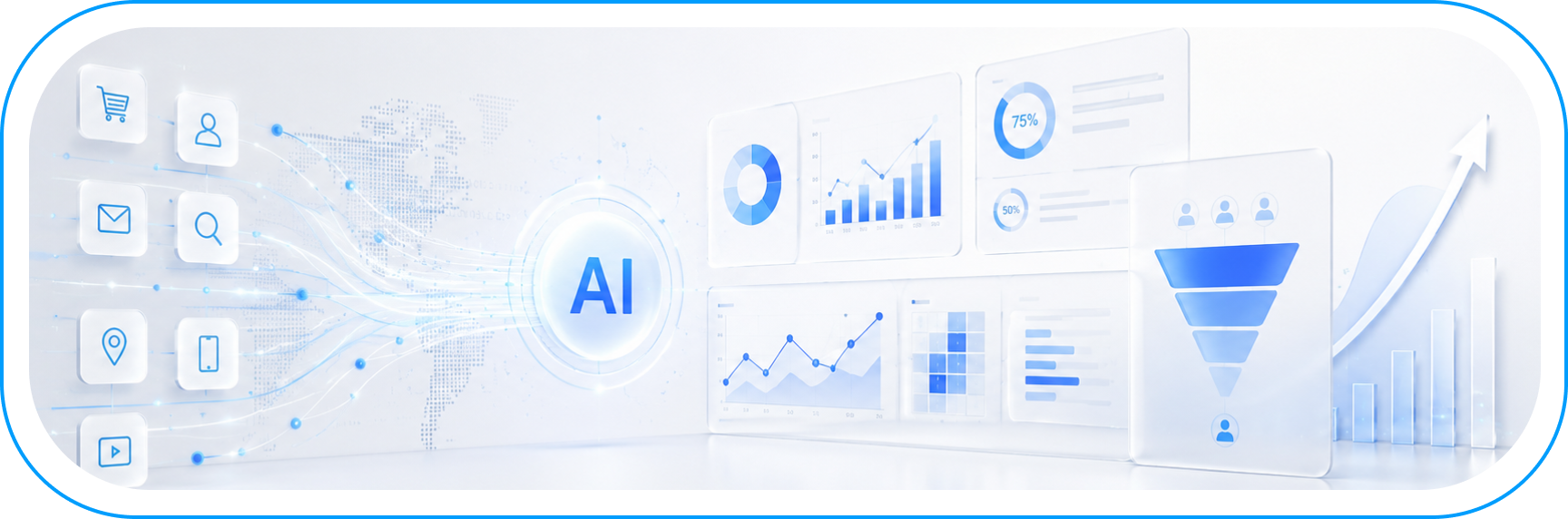
The modern customer journey is no longer linear. Consumers interact with brands across multiple touchpoints, from mobile apps and web platforms to transactional ERP and CRM systems. When this data remains siloed, companies lose a complete view of user behavior.
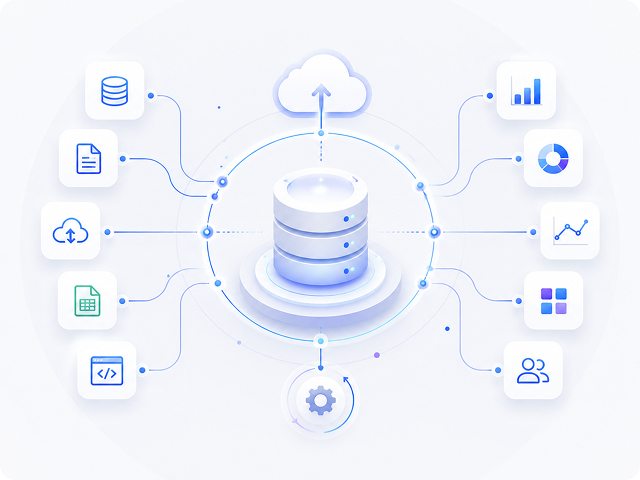
A centralized data platform (Data Lakehouse) supported by AI algorithms makes it possible to connect these sources into a single source of truth. Transforming raw events into clear business metrics can reduce the time needed to respond to conversion drops from weeks to just a few hours.
10 ways to increase conversion rates with AI and Modern Analytics
1. Integrating Data Silos with a Data Lakehouse Architecture
- Why it supports conversion optimization: Eliminating fragmented data across CRM, ERP, and web analytics systems makes it possible to build a consistent purchase history for each customer within a single source of truth. This helps calculate the actual profitability of individual stages of the customer journey without limitations caused by inconsistent identifiers.
2. Automatically Filtering Out Bot and Fraud Traffic
- Why it supports conversion optimization: Optimizing the funnel based on data contaminated by bot traffic or fraud can lead to incorrect business conclusions. Implementing machine learning models that analyze session patterns makes it possible to filter out artificial traffic in real time. As a result, analyses are based on the actual behavior of potential customers.
3. Automated Data Quality Monitoring and Data Governance (dbt, Dataform)
- Why it supports conversion optimization: Making changes to the customer journey based on incorrect, duplicated, or incomplete events can result in financial losses. Tools such as dbt or Dataform in Google Cloud enable automated data quality tests, such as checks for missing values or ID uniqueness, before the data is used in sales reports.
4. Real-Time Customer Journey Tracking and Mapping
- Why it supports conversion optimization: Moving from traditional overnight batch processing to streaming analytics significantly reduces the time needed to react to issues on a website or application. Tracking interactions across websites, mobile apps, and transactional systems enables immediate identification of friction points and stages where customers abandon the transaction process.
5. Automated Identification of Sales Funnel Friction
- Why it supports conversion optimization: Identifying specific questions, steps, or form errors that negatively affect sales can be difficult when there are many product variants and customer journeys. AI-powered funnel analytics can reduce the time required to diagnose conversion issues from several weeks to just a few hours. Based on our experience, this can often translate into a direct conversion increase of 15% to 25%.
6. Scaling Tests Without Budget Risk (FinOps)
- Why it supports conversion optimization: The high cost of processing analytical queries at scale often forces companies to limit the number of test variants. Implementing FinOps-by-design principles, such as partitioning and clustering in BigQuery or incremental processing, can significantly reduce infrastructure costs. Running multiple tests in parallel without worrying about exceeding the cloud budget makes it possible to identify the most profitable version of a page faster.
7. Cost per Conversion by Channel and Segment
- Why it supports conversion optimization: Combining advertising spend data from platforms such as Google Ads and Meta with transactional data in the cloud makes it possible to calculate the actual customer acquisition cost (CAC) almost in real time. Algorithms can recommend reallocating budgets toward more profitable user segments while campaigns are still running, rather than only after they end.
8. Real-Time Behavioral Micro-Segmentation
- Why it supports conversion optimization: Instead of relying on static demographic groups, machine learning algorithms can analyze a user’s current level of engagement in real time, including cursor movements, time spent on pricing sections, or scroll depth. This makes it possible to dynamically adjust page elements or deliver personalized marketing messages and value propositions that support the purchase decision.
9. Natural-Language Conversational Analytics (LLM + BigQuery)
- Why it supports conversion optimization: Waiting for reports to be prepared by overloaded BI teams can delay business decisions. Integrating large language models such as Google Gemini with a data warehouse allows managers to query company data using natural language. Fast access to statistics, insights, and visualizations within seconds makes it easier to validate business hypotheses without involving data engineers in every analysis.
10. Autonomous AI Agents (“Silent Testers”) for Continuous Testing
- Why it supports conversion optimization: Moving from manual, periodic performance reviews to an autonomous approach enables continuous optimization of the conversion funnel. Autonomous AI agents can monitor the statistical significance of test variants around the clock, automatically disable underperforming versions, and launch new testing hypotheses without waiting for weekly marketing team meetings.
Next Steps in Optimizing Business Performance
Of course, very few companies are able to implement all 10 of these scenarios at once. The key to success is not building a more complex architecture, but selecting the 2–3 areas that can deliver the highest return on investment (ROI) first and address the biggest bottlenecks in your sales process.
At Alterdata, we do not believe in rigid, standardized templates. We help companies through the entire process, from auditing data quality and architecture to building tailored solutions. We combine selected technologies, such as conversational analytics in BigQuery, automated testing, and ML-based micro-segmentation, into one coherent ecosystem. Instead of committing to long, high-risk projects, we work in a Data Team as a Service model, providing a flexible team of experts ready to start delivering value from day one.
Want to find out which of these approaches could drive the fastest sales growth in your company? Contact Alterdata experts and let’s discuss a strategy tailored to your business.