






Turn raw data into informed business decisions
Analytics provides detailed insights from data, helps track KPIs, and offers insights into customer needs and expectations.
Let’s talk
We empower leaders:









Unlock 100% of your data’s potential with expert data analytics consulting.
We transform data into actionable insights through innovative tools and solutions. Our processes supports business innovation, predicts market trends, and empowers swift responses to market changes.
We provide professional support at each of the five steps in building a data-driven company:
Designing the analytical process
We align with your organization’s goals, defining KPIs that matter most, ensuring data analytics solutions are tailored to your needs.
Integrating company data
Our big data analytics services integrate data from diverse sources into a scalable system, enhancing collaboration and enabling data-drive decisions.
Analyzing data
We model, process, and integrate data to deliver insights and reliable predictions. By improving data quality and governance, we ensure better decision -making capabilities.
Assisting in drawing conclusions.
We help interpret the results to better understand users, more wisely allocate budgets, identify market threats and trends, and uncover growth opportunities for your organization.
We help test and improve
We support your company as it transforms the insights into practical actions. Our iterative process includes A/B testing and the continuous refinement of analytics to ensure long-term value.

See how to build a data-driven company
Let’s talkWithout data analytics, you are missing out on market opportunities every day.
The gap between innovative data-driven companies and those that miss out on the data revolution will continue to grow. Will you join the ranks of organizations that will be successful in the market, or will you fall behind?

More costly mistakes
Without data analytics, a company is more likely to make decisions based on incomplete or inaccurate information. This increases the risk of mistakes and delays in key activities.
Delays in decision-making processes
The lack of reliable analysis to support decision-making processes significantly increases the time needed for your company to respond effectively when market conditions change.
Lack of insight into threats and opportunities
A company that does not use available data to identify areas for improvement and market opportunities risks increasing operating costs and missing out on growth opportunities.
No data on marketing profitability
Due to the inability to assess the return on investment in advertising, the company is unable to effectively track the costs and revenues of campaigns and allocate marketing budgets efficiently.

Discover what your data reveals, unlock its potential, and use that knowledge to drive your company’s growth.
Learn more about data analytics tailored to your organization’s unique needs and goals. Our solutions empower you to gain deeper insights, understand more effectively, and make decisions based on facts, not assumptions.

Business Intelligence
Business Intelligence (BI) involves collecting, analyzing, and visualizing data in a way that supports better, fact-based business decision-making.
Learn moreSmart Data Analytics
Analyzing data from your company and its business environment helps you better understand its situation, identify market opportunities, and mitigate risks.
Learn moreData Quality
Better information quality ensures that your business decisions are based on reliable and accurate data, reduces operational risk, and helps eliminate unnecessary costs.
Learn moreConversational Analytics
Analyzing text and voice interactions from chats, calls, and emails helps you uncover customer insights, evaluate service quality, and discover hidden operational trends.
Learn moreDiscover our clients’ success stories

The company increased conversion by 25% thanks to customer journey analytics
We mapped the user journey, identified critical drop-off points, and implemented a modern analytics stack (GA4, BigQuery, dbt, Tableau). This gave the client full visibility into their data and the ability to respond immediately.
The result? Up to 25% higher conversion, faster decision-making, and increased revenue without increasing the marketing budget.

We built a scalable BI environment for PŚO with daily operational reporting
We helped Polskie Światłowody Otwarte integrate data from multiple systems by building a multi-layered data model in Dataform and Google BigQuery. Based on this, we created a daily updated operational report in Power BI.
The result? A centralized data source, faster management decision-making, elimination of manual reporting, and full transparency of metrics for the Commercial Department.

We helped Celsium balance its heating data and save PLN 180,000 per year thanks to cloud analytics
We integrated data from meters, SCADA systems, billing systems, and weather systems into a single environment on Google Cloud Platform. We built a data warehouse, automated ETL processes, and dashboards in Tableau, enabling hourly heat consumption balancing and faster operational decisions.
The result? Four times lower analytical system maintenance costs, meter failure detection within one day, dynamic demand forecasts, and over PLN 180,000 in annual savings.

BoredPanda increased retention and campaign effectiveness with push analytics
BoredPanda automated reporting by integrating data from Firebase, Singular, and GCP. The implementation of push campaign analytics made it possible to measure the real impact of notifications on user behavior.
The result? The company improved retention, increased engagement, and manages its advertising budget more effectively based on reliable data.
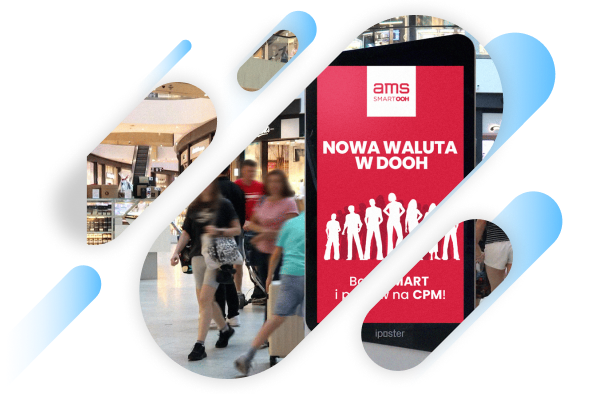
We helped AMS build a data platform that increased advertising effectiveness and maintained its leading position
We integrated data from Proxi.cloud, CitiesAI, and AMS internal systems into a new BigQuery-based data warehouse. We created a data model, ELT processes, and dashboards that enable near real-time campaign performance analysis.
The result? Precise ad targeting, programmatic buying based on demographic and behavioral data, faster decisions, and a higher return on investment for the agency’s clients.

Your data holds great potential. Ask us how to make the most of it
Why choose data analytics with Alterdata?
We combine expert experience, extensive technical knowledge, and a flexible approach to collaboration to create data solutions that are truly tailored to your organization’s needs.
Comprehensive End-to-End Implementation
We manage the entire process: from consulting and technology selection, through data warehouse construction, to the development, maintenance, and optimization of solutions. This ensures that our clients receive consistent support at every stage of their data-related work, without having to coordinate multiple independent vendors.
Data Expert Team
We bring together the expertise of data engineers, analysts, data scientists, IT architects, and business consultants to address both technological and business needs. Our team helps translate an organization’s goals into concrete solutions that effectively support decision-making and business growth.
Technology Neutrality
We choose tools based on the goal, not the other way around. We work with popular cloud and analytics technologies, including Google Cloud, Azure, AWS, Snowflake, Databricks, Power BI, Tableau, and Looker. Thanks to our extensive knowledge of these tools, we recommend the solutions best suited to the client’s situation, rather than pushing a single technology.
Flexible Model of Collaboration
We offer support exactly when you need it, ranging from individual specialists to a Data Team as a Service model, without the need to build a full in-house team. This allows you to quickly expand your organization’s capabilities and leverage expert knowledge in a way that aligns with your current needs.
Business-Specific Solutions
We design services and architecture tailored to specific requirements, budgets, industries, company sizes, and business objectives. We treat each implementation as a unique case to ensure that the technology supports the processes, workflows, and priorities of the organization in question.
Secure Architecture
We create scalable, secure solutions designed to support organizational growth, handle increasing data volumes, and facilitate migration to modern cloud environments. We ensure access control, stability, and scalability so that the data platform can grow alongside your business.
Tech stack: the foundation of
our work
Discover the tools and technologies that power the solutions created by Alterdata.

Google Cloud Storage enables data storage in the cloud and provides high performance, offering flexible management of large datasets. It ensures easy data access and supports advanced analytics.

Azure Data Lake Storage is a service for storing and analyzing structured and unstructured data in the cloud, created by Microsoft. Data Lake Storage is scalable and supports various data formats.

Amazon S3 is a cloud service for securely storing data with virtually unlimited scalability. It is efficient, ensures consistency, and provides easy access to data.

Databricks is a cloud-based analytics platform that combines data engineering, data analysis, machine learning, and predictive models. It processes large datasets with high efficiency.

Microsoft Fabric is an integrated analytics environment that combines various tools such as Power BI, Data Factory, and Synapse. The platform supports the entire data lifecycle, including integration, processing, analysis, and visualization of results.

Google BigLake is a service that combines the features of both data warehouses and data lakes, making it easier to manage data in various formats and locations. It also allows processing large datasets without the need to move them between systems.

Google Cloud Dataflow is a data processing service based on Apache Beam. It supports distributed data processing in real-time and advanced analytics.

Azure Data Factory is a cloud-based data integration service that automates data flows and orchestrates processing tasks. It enables seamless integration of data from both cloud and on-premises sources for processing within a single environment.

Apache Kafka processes real-time data streams and supports the management of large volumes of data from various sources. It enables the analysis of events immediately after they occur.

Pub/Sub is used for messaging between applications, real-time data stream processing, analysis, and message queue creation. It integrates well with microservices and event-driven architectures (EDA).

Google Cloud Run supports containerized applications in a scalable and automated way, optimizing costs and resources. It allows flexible and efficient management of cloud applications, reducing the workload.

Azure Functions is another serverless solution that runs code in response to events, eliminating the need for server management. Its other advantages include the ability to automate processes and integrate various services.

AWS Lambda is an event-driven, serverless Function as a Service (FaaS) that enables automatic execution of code in response to events. It allows running applications without server infrastructure.

Azure App Service is a cloud platform used for running web and mobile applications. It offers automatic resource scaling and integration with DevOps tools (e.g., GitHub, Azure DevOps).

Snowflake is a platform that enables the storage, processing, and analysis of large datasets in the cloud. It is easily scalable, efficient, and ensures consistency as well as easy access to data.

Amazon Redshift is a cloud data warehouse that enables fast processing and analysis of large datasets. Redshift also offers the creation of complex analyses and real-time data reporting.

BigQuery is a scalable data analysis platform from Google Cloud. It enables fast processing of large datasets, analytics, and advanced reporting. It simplifies data access through integration with various data sources.

Azure Synapse Analytics is a platform that combines data warehousing, big data processing, and real-time analytics. It enables complex analyses on large volumes of data.

Data Build Tool simplifies data transformation and modeling directly in databases. It allows creating complex structures, automating processes, and managing data models in SQL.

Dataform is part of the Google Cloud Platform, automating data transformation in BigQuery using SQL query language. It supports serverless data stream orchestration and enables collaborative work with data.

Pandas is a data structure and analytical tool library in Python. It is useful for data manipulation and analysis. Pandas is used particularly in statistics and machine learning.

PySpark is an API for Apache Spark that allows processing large amounts of data in a distributed environment, in real-time. This tool is easy to use and versatile in its functionality.

Looker Studio is a tool used for exploring and advanced data visualization from various sources, in the form of clear reports, charts, and interactive dashboards. It facilitates data sharing and supports simultaneous collaboration among multiple users, without the need for coding.

Tableau, an application from Salesforce, is a versatile tool for data analysis and visualization, ideal for those seeking intuitive solutions. It is valued for its visualizations of spatial and geographical data, quick trend identification, and data analysis accuracy.

Power BI, Microsoft’s Business Intelligence platform, efficiently transforms large volumes of data into clear, interactive dashboards and accessible reports. It easily integrates with various data sources and monitors KPIs in real-time.
Looker is a cloud-based Business Intelligence and data analytics platform that enables data exploration, sharing, and visualization while supporting decision-making processes. Looker also leverages machine learning to automate processes and generate predictions.

Terraform is an open-source tool that allows for infrastructure management as code, as well as the automatic creation and updating of cloud resources. It supports efficient infrastructure control, minimizes the risk of errors, and ensures transparency and repeatability of processes.

GCP Workflows automates workflows in the cloud and simplifies the management of processes connecting Google Cloud services. This tool saves time by avoiding the duplication of tasks, improves work quality by eliminating errors, and enables efficient resource management.

Apache Airflow manages workflows, enabling scheduling, monitoring, and automation of ETL processes and other analytical tasks. It also provides access to the status of completed and ongoing tasks, as well as insights into their execution logs.

Rundeck is an open-source automation tool that enables scheduling, managing, and executing tasks on servers. It allows for quick response to events and supports the optimization of administrative tasks.

Python is a programming language, also used for machine learning, with libraries dedicated to machine learning (e.g., TensorFlow and scikit-learn). It is used for creating and testing machine learning models.

BigQuery ML allows the creation of machine learning models directly within Google’s data warehouse using only SQL. It provides a fast time-to-market, is cost-effective, and enables rapid iterative work.

R is a programming language primarily used for statistical calculations, data analysis, and visualization, but it also has modules for training and testing machine learning models. It enables rapid prototyping and deployment of machine learning.

Vertex AI is used for deploying, testing, and managing machine learning models. It also includes pre-built models prepared and trained by Google, such as Gemini. Vertex AI also supports custom models from TensorFlow, PyTorch, and other popular frameworks.
FAQ
How does data analytics help in running a business?

Data analytics supports businesses at three key stages. First, it describes the current state, providing information about ongoing processes and results, enabling better monitoring. Second, it explains why certain phenomena occur by identifying causes and relationships. Third, it predicts future events, facilitating better planning and strategic decision-making. As a result, data analytics becomes a tool for supporting management, optimizing processes, and increasing a company’s competitiveness.
Is data analytics a solution only for large corporations?
No, any company can benefit from analytical solutions, regardless of size, industry, or business model. Solutions developed by Alterdata scale to meet the client’s needs, ensuring optimal use of available digital resources. This allows even small businesses to increase profitability and competitiveness.
How will I be able to evaluate the effects of data analytics?
The effects of data analytics can be assessed based on its performance in four key areas. First, it describes the current state by providing precise information. Second, it explains why certain phenomena occur by identifying their causes. Third, it forecasts what may happen in the future. Finally, it suggests the best actions to take to achieve desired goals. This way, analytics not only helps to better understand reality but also becomes a tool for making more informed decisions.
How quickly will I see the effects of implementing data analytics in my company?
The time from a needs audit to the configuration of analytical systems and the creation of dashboards and reports is usually 2-3 months. Advanced implementations may take longer, but we deliver initial effects and tangible results at an early stage of the project, allowing you to quickly notice the benefits of data analytics.
Does an external analyst or data engineer have access to all the information in our company?
We ensure complete data security. Access to information is strictly controlled, and our experts only have visibility into the data necessary to carry out the project, in accordance with the highest protection standards. We do not extract data; it is stored exclusively on the client’s side.
Do you adapt to specific industry needs?
Yes, we work with clients to uncover their needs and tailor our services to specific industry requirements. We have experience working with companies across various sectors, such as e-commerce, gaming, finance, TSL, and energy. This enables us to understand the unique challenges and business goals of our clients. By combining industry-specific knowledge with advanced technologies, we deliver highly personalized solutions.