





Data-driven solutions for TSL Industry
Our analytics include: early prediction of delays, reduction of delivery costs, and rapid operational decisions
Let’s talk
We empower leaders:







Change your data
for faster deliveries and lower costs
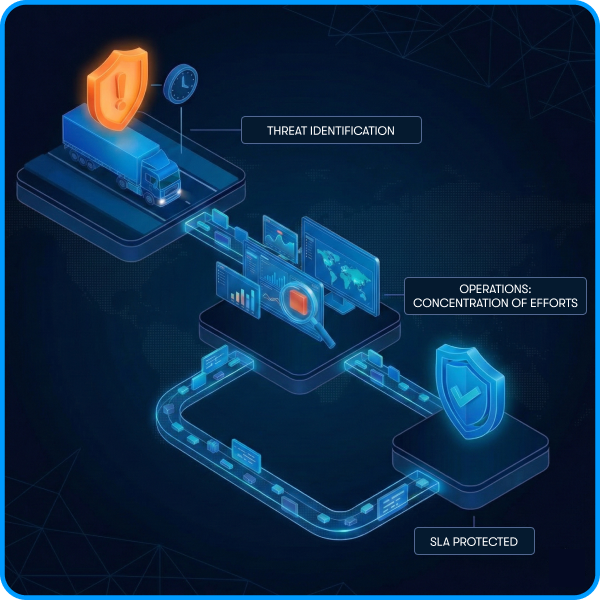
Proactive operational decisions instead of firefighting – risk prediction and real-time visibility enable operational teams to respond 24–72 hours in advance, before delays, congestion, or resource shortages impact the customer.
Controlling margins and profitability in volatile conditions – cost analysis and profitability prediction per relationship and order enable margin protection, better commercial decisions, and renegotiations before an order becomes unprofitable.
Scaling operations without increasing chaos – a single version of the truth about operational data, automation, and ML enable you to grow volumes without proportionally increasing your team and operational risk.
Use data to grow your business
Free consultationWe have proven solutions
for your company’s challenges
Prediction of delay risks (Early Warning)
Prediction of delay risks (Early Warning)
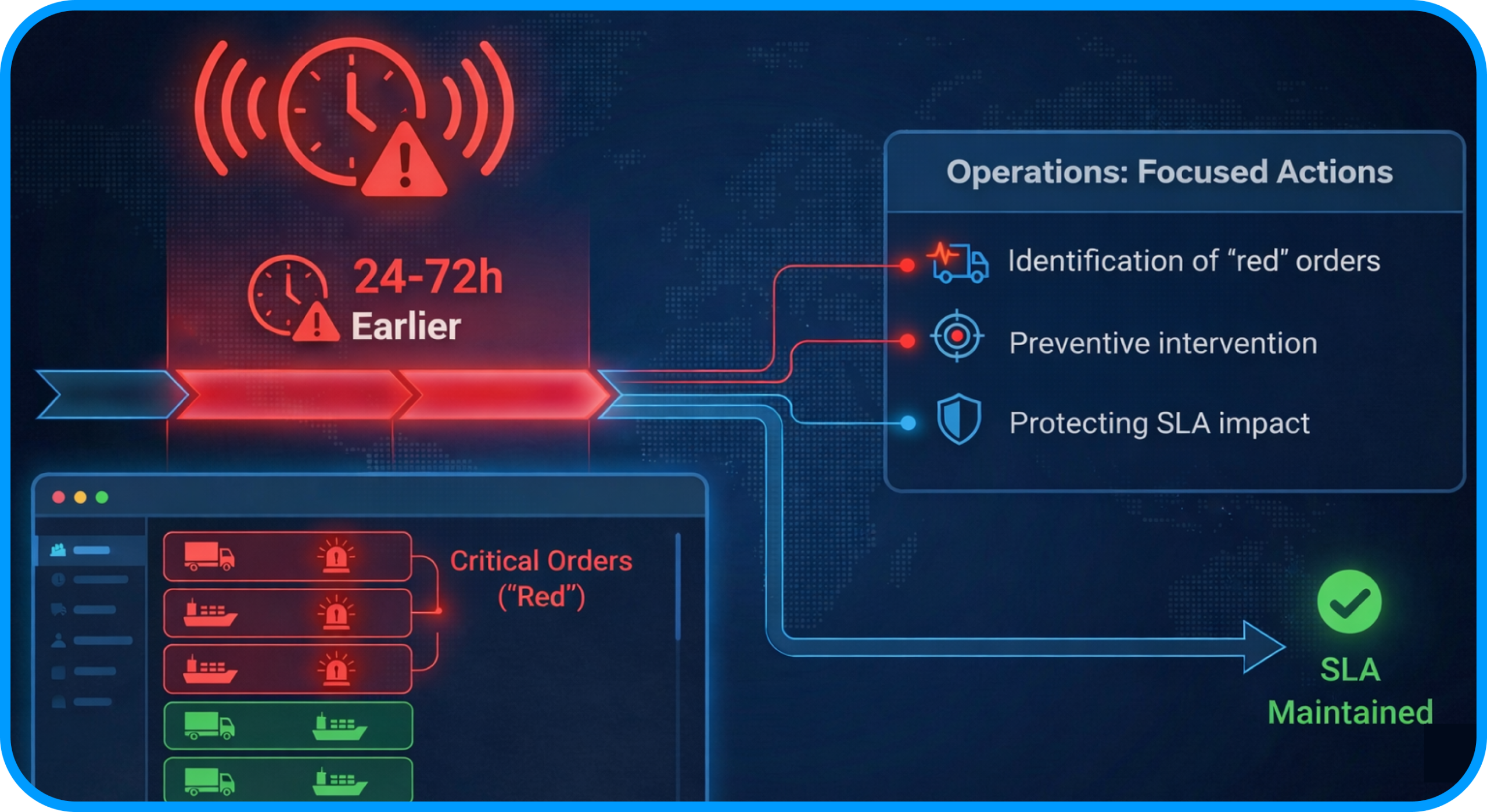
The system identifies shipments at risk of delay up to 24–72 hours in advance. Operations know which orders are “red” and where to focus their efforts before the problem actually affects the SLA.
Profitability prediction before accepting an order
Profitability prediction before accepting an order
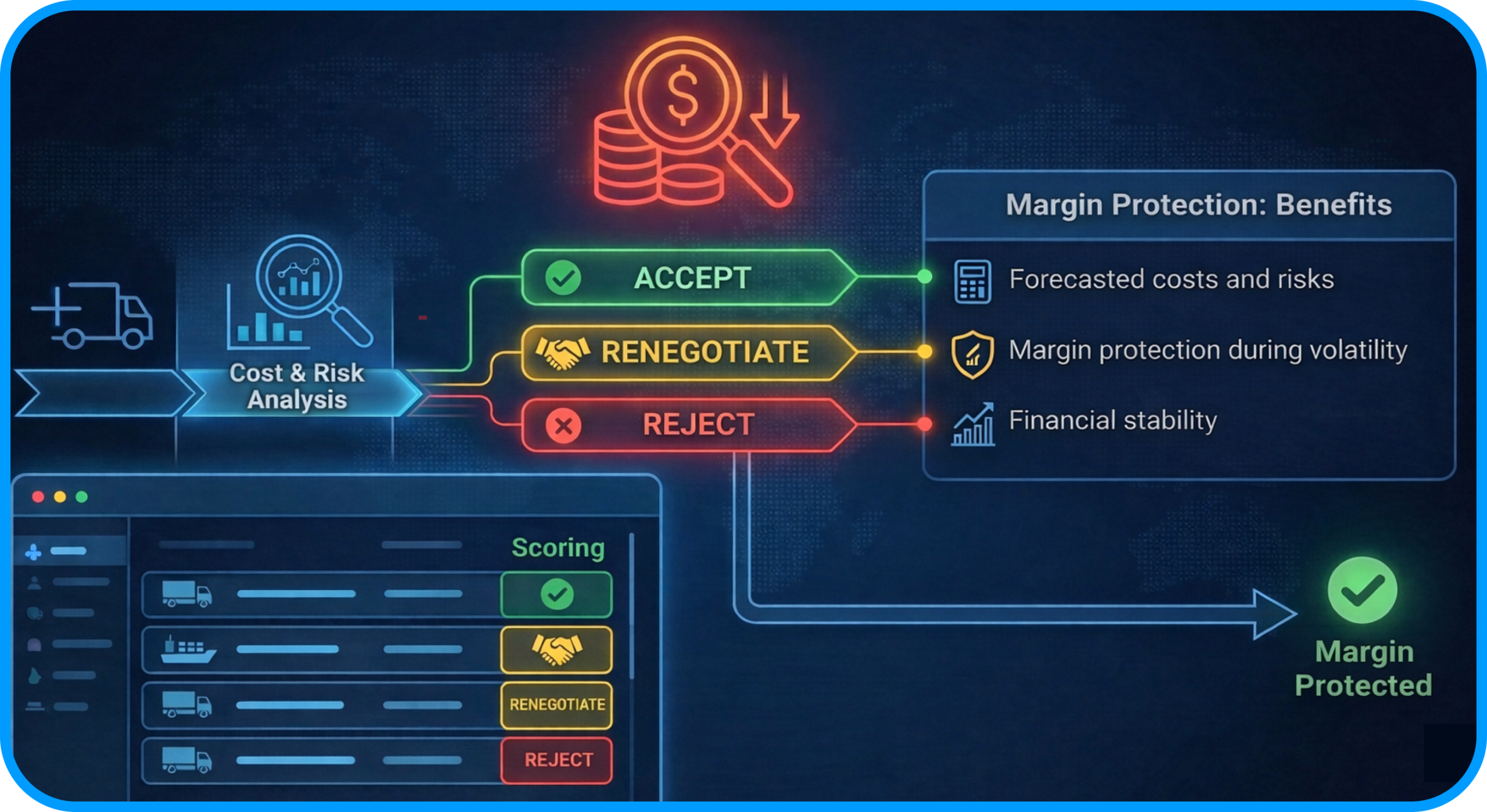
Each order receives a “take/renegotiate/don’t take” score based on projected costs and risks. This allows operators to protect their margins even when energy and service prices are highly volatile.
Resource availability prediction
Resource availability prediction
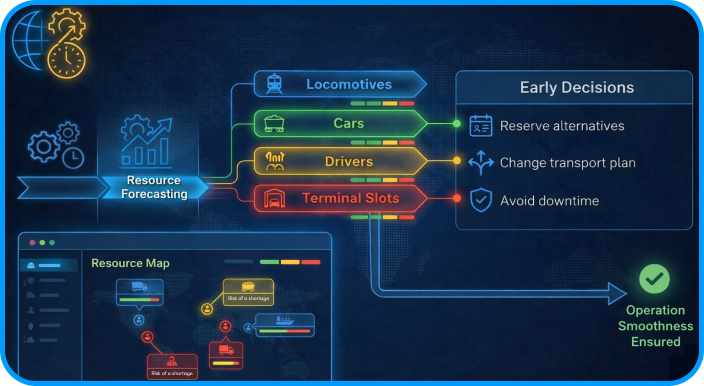
The solution anticipates the risk of a shortage of locomotives, wagons, drivers, or terminal slots, enabling early decisions to be made about changing the transport plan or booking alternatives.
SLA risk scoring and proactive customer service
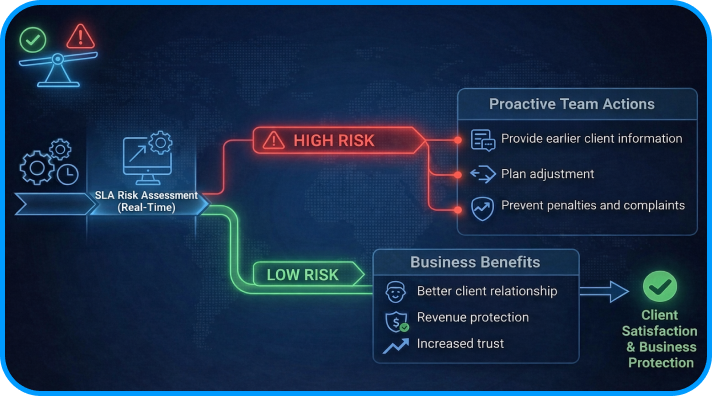
SLA risk scoring and proactive customer service
The system continuously assesses the risk of SLA non-compliance. Teams can notify the customer in advance, change the plan, or prevent penalties and complaints.
Custom CDC, the foundation of prediction and ML
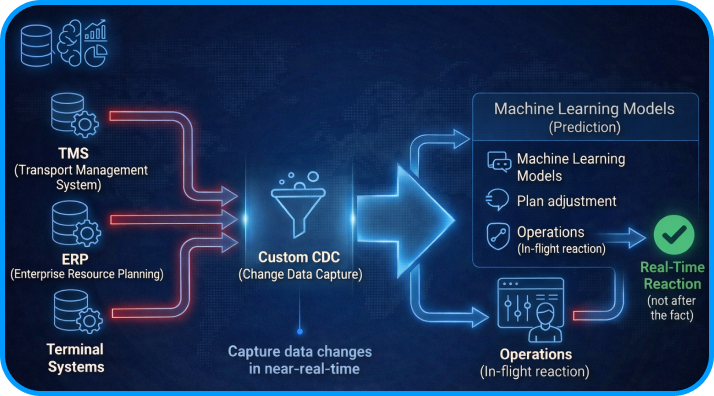
Custom CDC, the foundation of prediction and ML
We capture changes in TMS, ERP, and terminal systems in near-real-time. This allows ML models and operations to respond “during” transport, rather than to historical data after the fa
We share our
knowledge and experience





Your data holds great potential. Ask us how to make the most of it
Why should choose Alterdata?
We combine expert experience, extensive technical knowledge, and a flexible approach to collaboration to create data solutions that are truly tailored to your organization’s needs.
Comprehensive End-to-End Implementation
We manage the entire process: from consulting and technology selection, through data warehouse construction, to the development, maintenance, and optimization of solutions. This ensures that our clients receive consistent support at every stage of their data-related work, without having to coordinate multiple independent vendors.
Data Expert Team
We bring together the expertise of data engineers, analysts, data scientists, IT architects, and business consultants to address both technological and business needs. Our team helps translate an organization’s goals into concrete solutions that effectively support decision-making and business growth.
Technology Neutrality
We choose tools based on the goal, not the other way around. We work with popular cloud and analytics technologies, including Google Cloud, Azure, AWS, Snowflake, Databricks, Power BI, Tableau, and Looker. Thanks to our extensive knowledge of these tools, we recommend the solutions best suited to the client’s situation, rather than pushing a single technology.
Flexible Model of Collaboration
We offer support exactly when you need it, ranging from individual specialists to a Data Team as a Service model, without the need to build a full in-house team. This allows you to quickly expand your organization’s capabilities and leverage expert knowledge in a way that aligns with your current needs.
Business-Specific Solutions
We design services and architecture tailored to specific requirements, budgets, industries, company sizes, and business objectives. We treat each implementation as a unique case to ensure that the technology supports the processes, workflows, and priorities of the organization in question.
Secure Architecture
We create scalable, secure solutions designed to support organizational growth, handle increasing data volumes, and facilitate migration to modern cloud environments. We ensure access control, stability, and scalability so that the data platform can grow alongside your business.
Tech stack: the foundation of
our work
Discover the tools and technologies that power the solutions created by Alterdata.

Google Cloud Storage enables data storage in the cloud and provides high performance, offering flexible management of large datasets. It ensures easy data access and supports advanced analytics.

Azure Data Lake Storage is a service for storing and analyzing structured and unstructured data in the cloud, created by Microsoft. Data Lake Storage is scalable and supports various data formats.

Amazon S3 is a cloud service for securely storing data with virtually unlimited scalability. It is efficient, ensures consistency, and provides easy access to data.

Databricks is a cloud-based analytics platform that combines data engineering, data analysis, machine learning, and predictive models. It processes large datasets with high efficiency.

Microsoft Fabric is an integrated analytics environment that combines various tools such as Power BI, Data Factory, and Synapse. The platform supports the entire data lifecycle, including integration, processing, analysis, and visualization of results.

Google BigLake is a service that combines the features of both data warehouses and data lakes, making it easier to manage data in various formats and locations. It also allows processing large datasets without the need to move them between systems.

Google Cloud Dataflow is a data processing service based on Apache Beam. It supports distributed data processing in real-time and advanced analytics.

Azure Data Factory is a cloud-based data integration service that automates data flows and orchestrates processing tasks. It enables seamless integration of data from both cloud and on-premises sources for processing within a single environment.

Apache Kafka processes real-time data streams and supports the management of large volumes of data from various sources. It enables the analysis of events immediately after they occur.

Pub/Sub is used for messaging between applications, real-time data stream processing, analysis, and message queue creation. It integrates well with microservices and event-driven architectures (EDA).

Google Cloud Run supports containerized applications in a scalable and automated way, optimizing costs and resources. It allows flexible and efficient management of cloud applications, reducing the workload.

Azure Functions is another serverless solution that runs code in response to events, eliminating the need for server management. Its other advantages include the ability to automate processes and integrate various services.

AWS Lambda is an event-driven, serverless Function as a Service (FaaS) that enables automatic execution of code in response to events. It allows running applications without server infrastructure.

Azure App Service is a cloud platform used for running web and mobile applications. It offers automatic resource scaling and integration with DevOps tools (e.g., GitHub, Azure DevOps).

Snowflake is a platform that enables the storage, processing, and analysis of large datasets in the cloud. It is easily scalable, efficient, and ensures consistency as well as easy access to data.

Amazon Redshift is a cloud data warehouse that enables fast processing and analysis of large datasets. Redshift also offers the creation of complex analyses and real-time data reporting.

BigQuery is a scalable data analysis platform from Google Cloud. It enables fast processing of large datasets, analytics, and advanced reporting. It simplifies data access through integration with various data sources.

Azure Synapse Analytics is a platform that combines data warehousing, big data processing, and real-time analytics. It enables complex analyses on large volumes of data.

Data Build Tool simplifies data transformation and modeling directly in databases. It allows creating complex structures, automating processes, and managing data models in SQL.

Dataform is part of the Google Cloud Platform, automating data transformation in BigQuery using SQL query language. It supports serverless data stream orchestration and enables collaborative work with data.

Pandas is a data structure and analytical tool library in Python. It is useful for data manipulation and analysis. Pandas is used particularly in statistics and machine learning.

PySpark is an API for Apache Spark that allows processing large amounts of data in a distributed environment, in real-time. This tool is easy to use and versatile in its functionality.

Looker Studio is a tool used for exploring and advanced data visualization from various sources, in the form of clear reports, charts, and interactive dashboards. It facilitates data sharing and supports simultaneous collaboration among multiple users, without the need for coding.

Tableau, an application from Salesforce, is a versatile tool for data analysis and visualization, ideal for those seeking intuitive solutions. It is valued for its visualizations of spatial and geographical data, quick trend identification, and data analysis accuracy.

Power BI, Microsoft’s Business Intelligence platform, efficiently transforms large volumes of data into clear, interactive dashboards and accessible reports. It easily integrates with various data sources and monitors KPIs in real-time.
Looker is a cloud-based Business Intelligence and data analytics platform that enables data exploration, sharing, and visualization while supporting decision-making processes. Looker also leverages machine learning to automate processes and generate predictions.

Terraform is an open-source tool that allows for infrastructure management as code, as well as the automatic creation and updating of cloud resources. It supports efficient infrastructure control, minimizes the risk of errors, and ensures transparency and repeatability of processes.

GCP Workflows automates workflows in the cloud and simplifies the management of processes connecting Google Cloud services. This tool saves time by avoiding the duplication of tasks, improves work quality by eliminating errors, and enables efficient resource management.

Apache Airflow manages workflows, enabling scheduling, monitoring, and automation of ETL processes and other analytical tasks. It also provides access to the status of completed and ongoing tasks, as well as insights into their execution logs.

Rundeck is an open-source automation tool that enables scheduling, managing, and executing tasks on servers. It allows for quick response to events and supports the optimization of administrative tasks.

Python is a programming language, also used for machine learning, with libraries dedicated to machine learning (e.g., TensorFlow and scikit-learn). It is used for creating and testing machine learning models.

BigQuery ML allows the creation of machine learning models directly within Google’s data warehouse using only SQL. It provides a fast time-to-market, is cost-effective, and enables rapid iterative work.

R is a programming language primarily used for statistical calculations, data analysis, and visualization, but it also has modules for training and testing machine learning models. It enables rapid prototyping and deployment of machine learning.

Vertex AI is used for deploying, testing, and managing machine learning models. It also includes pre-built models prepared and trained by Google, such as Gemini. Vertex AI also supports custom models from TensorFlow, PyTorch, and other popular frameworks.
FAQ
1. How does Alterdata support logistics companies in their work with data?

Alterdata helps logistics companies organize operational data, integrate it from various systems, and automate reporting. This allows operational and management teams to work with consistent, up-to-date data instead of manual reports.
2. What logistical problems does Alterdata help solve?
The most common problems include scattered data across multiple systems, manual reports in Excel, lack of a single source of truth, and limited visibility of operational processes. In the Loconi case study, we showed how organizing data can really streamline everyday work.
3. What systems and data sources does Alterdata integrate into logistics projects?
We integrate data from TMS, WMS, operating systems, ERP, financial systems, and report files, among others, creating a central analytical environment accessible to the entire organization.
4. How does reporting automation help operational teams?
Automatic reports eliminate manual work, reduce the risk of errors, and allow you to monitor key operational indicators such as timeliness, resource utilization, and process efficiency on an ongoing basis.
5. Does Alterdata assist in operational and management decision-making?
Yes. We build operational and management dashboards that enable quick response to problems, better resource planning, and decision-making based on current data.
6. Are Alterdata solutions suitable for logistics companies of different sizes?
Yes. We work with both regional logistics operators and larger companies in the TSL sector. We always tailor the scope of the solution to the scale of operations and maturity of the customer’s data.