









From reaction to prediction: How is predictive machine learning revolutionizing marketing budget management?
⏱️ Reading time: approx. 6 minutes
Introduction
Modern marketing has accustomed us to immediate performance metrics. Machine learning algorithms enable the analysis of early signals in user behavior to forecast future actions allowing teams to make budget decisions long before the full return on investment becomes visible.
But what happens when the real return on investment takes months, or even years, to materialize? In industries like mobile gaming, subscription apps, or premium e-commerce, a traditional approach based solely on real-time, immediate results often proves to be a dead end. Static attribution rules and standard ad platform windows fail when the customer lifecycle is long and complex. This is why predictive analysis becomes essential for accurate forecasting, better campaign optimization, and precise budget allocation.
This article is aimed at companies looking to leverage advanced analytics and machine learning to optimize marketing, boost customer lifetime value, and allocate budgets more accurately. We demonstrate how machine learning algorithms connect with data quality, integration, modern analytical platforms, data architecture, and data modeling. We also explain how these technologies help forecast campaign outcomes and enable proactive decision-making. To scale a business effectively, static reports are no longer enough - you need models that predict what the customer will do next.
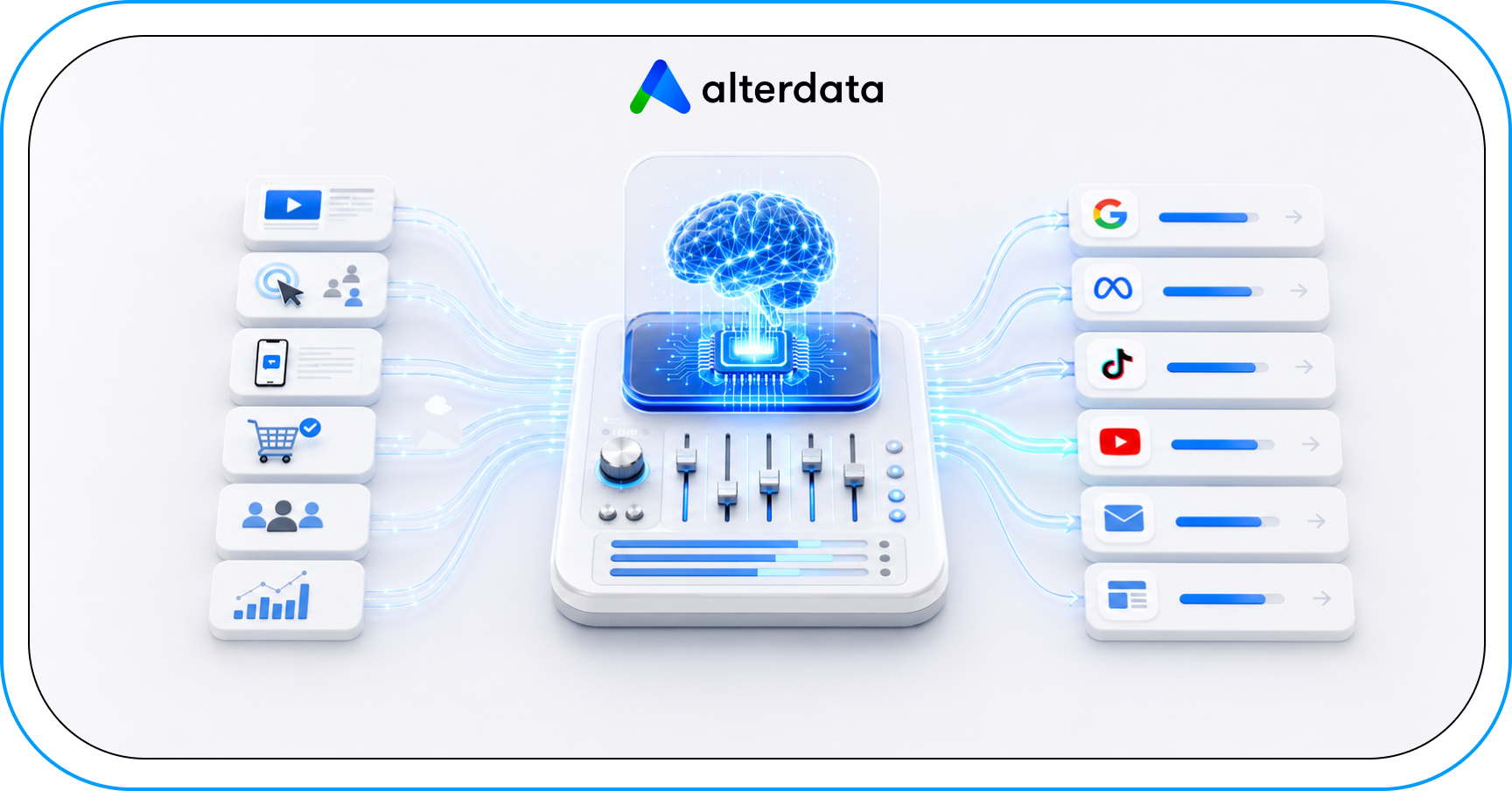
The trap of static rules and Data Management silos
Most organizations base their marketing decisions on rigid assumptions and reactive analysis, evaluating campaigns strictly on what has already occurred. However, business reality is complex. Marketing, financial, and product data frequently circulate in separate systems, originating from disparate sources including business applications and operational systems. CRM platforms do not connect with user behavior logs, transactional systems operate independently, and spreadsheets remain the primary, manual tool for "bridging" these worlds.
This information chaos and lack of unified identifiers distort the true picture of long-term Customer Lifetime Value (LTV). Better data integration and analysis not only improve LTV estimation but also support decision-making and drive overall marketing efficiency. Static optimization rules within ad platforms favor cheap installs or superficial initial actions. They cannot predict how customer behavior will evolve - whether a newly acquired user will churn after two days or remain a loyal, paying subscriber for the next year. As a result, User Acquisition (UA) budgets are misallocated, ignoring real LTV, order history, average order value (AOV), and long-term profitability potential alongside customer experience.
How predictive analytics and machine learning revolutionize campaign optimization
The solution to this problem is shifting from a reactive to a proactive approach through machine learning. Advanced ML algorithms analyze early behavioral signals—such as user activity within the first 24 to 48 hours after interacting with a brand. This predictive analysis utilizes historical data and statistical algorithms iteratively: it identifies patterns, supports future outcome forecasting, and continuously adapts to changing data to improve accuracy. These capabilities represent core benefits of predictive analysis, helping organizations make proactive decisions earlier in the lifecycle. These models identify unique behavior patterns in large datasets, automating data analysis, enabling faster customer behavior insights, improving customer service quality, and correlating early actions with a high probability of future purchases or subscription renewals.
Instead of waiting many months for hard financial data and full reconciliation of cohort data, user acquisition teams receive precise forecasts almost immediately. In practice, widely recognized techniques and other methods are used, such as linear regression, time series models, the ARIMA model, decision trees, random forests, and gradient boosting. Neural networks are also among the popular classification models. Clustering models, on the other hand, group users with similar attributes, helping to define customer segments for marketing strategies. This approach demonstrates how predictive analytics is used in nearly every industry, from marketing to finance - anywhere where forecasting and identifying trends are important, including in marketing campaigns and in cases where data mining can help detect fraudulent transactions in banking. The use of predictive machine learning models allows for the rapid reallocation of marketing budgets to traffic sources that generate the most valuable users in the long term—for example, when recommendation systems in retail analyze user behavior and suggest products. Instead of optimizing campaigns based on historical ROAS metrics, marketing effectively manages future profits by making data-driven decisions that increase conversions and minimize the risk of losses. Many AI agents can handle complex tasks related to review, documentation, and support. However, large-scale training and deployment require enormous amounts of data and computing power. We discussed this topic in detail during our recent webinar on conversational analytics.
Preparing historical data: Clean, high-quality data as the foundation for effective prediction
Implementing artificial intelligence and advanced machine learning is not simply a matter of feeding raw, chaotic data into models. As data engineering practice shows, the success of analytical projects depends heavily on proper process preparation, structure, and input data quality. The data model dictates how data is represented across systems; thus, data preparation is critical when models must process massive amounts of information without losing quality. Feeding an algorithm inconsistent logs from data silos will only produce useless forecasts.
To ensure predictive machine learning yields a solid return on investment, an organization needs a Modern Data Stack:
- Automated Testing and Assertions: Implementing quality tests allows continuous monitoring of information within data pipelines, protecting the organization from making key decisions based on faulty metrics.
- Centralization in a Cloud Data Warehouse: Integrating disparate sources into a central repository (such as Google BigQuery). A modern data warehouse supports both structured and unstructured data management, whereas traditional data warehouses were designed primarily for static reporting. Today, these are also complemented by Data Lakes for raw information.
- Centralized Modeling and Business Logic: Logical data modeling defines attributes, relationships, and object structures within the warehouse. Employing advanced transformation tools (e.g., Dataform, dbt) unifies business logic, eliminates duplicates, and prevents errors.
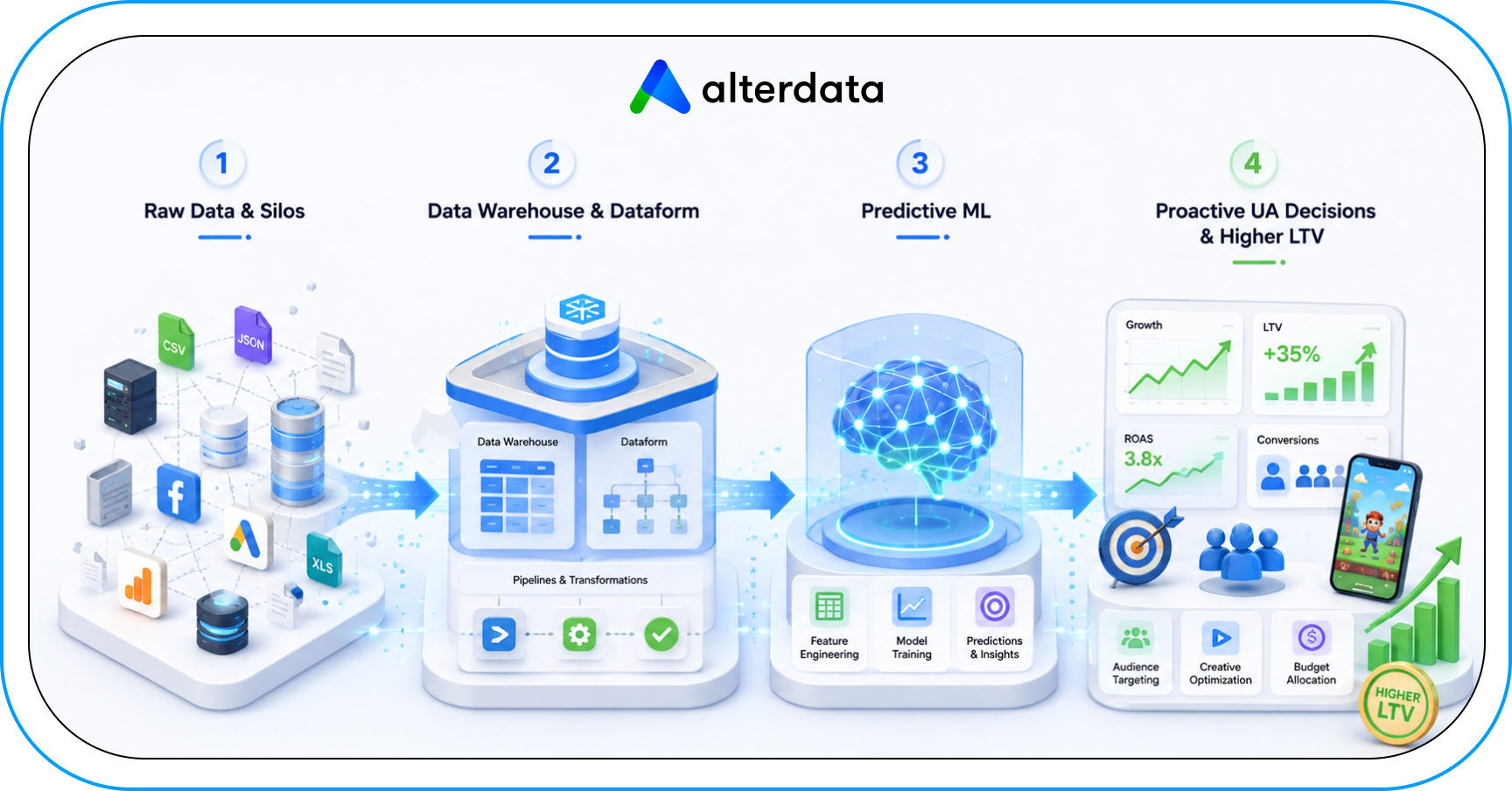
Elevating analytical maturity and developing predictive analysis through regression
The use of models based on machine learning transforms the entire organizational culture. Traditional, basic analytics only answers the question: "What happened?", positioning the business as a passive observer of metrics. Machine learning expands the capabilities of traditional analytics to include predictive modeling and data mining, allowing the discovery of hidden patterns and forecasting future user behavior. Predictive machine learning algorithms allow dynamic answers to the question: "What will happen and how can we influence it?". Their applications span multiple business areas, such as sales forecasting, predicting customer behavior, detecting churn risk, or optimizing marketing efforts. By analyzing large datasets, models can identify dependencies that are difficult to spot using traditional analytical methods. In practice, this means dynamic pricing, identifying high-value customers, and risk identification. It is also an iterative process that supports better sales forecasting, market trend analysis, and solving problems before they impact company performance. The success of such projects depends on the process and data quality, which is why data preparation is crucial.
Such a transformation reduces the time to identify bottlenecks in the sales funnel from weeks to just a few hours, enabling immediate hypothesis testing in ad campaigns. Similar approaches are used in finance for fraud detection and credit risk assessment, and insurance companies use them for pricing risk and claims. In cybersecurity, machine learning analyzes network data, detects anomalies, and helps identify cyber threats, improving digital security. Companies using predictive analytics significantly increase operational efficiency. It also works well in manufacturing and maintenance, where machine failures are predicted before they occur, as well as for other operational purposes. Instead of relying on intuition or outdated, static rules, centralized data modeling and algorithms give managers the tools to proactively manage profitability and flexibly respond to dynamic market changes. Predictive analytics helps reduce the risk of misguided investments because it allows early evaluation of potential outcomes and better budget allocation. In this way, it supports making smarter decisions and building a competitive advantage.
Technical Challenges in Model Deployment
Effective use of machine learning models requires proper data preparation and ongoing monitoring of their performance. The most important technical challenges include:
- Data Quality: Training models requires sufficiently large, complete, and reliable datasets. Missing data, errors, or bias can severely degrade forecast accuracy.
- Data Pipeline Monitoring: Proper data modeling along with test and assertion deployments ensure the ongoing quality of data fed into the model.
- Data and Model Drift: Customer behaviors and market conditions change over time. Consequently, a model that initially performed well may gradually lose effectiveness.
- Regular Retraining: Models must be monitored, reviewed, and retrained on fresh data to maintain forecast reliability.
- Deployment and Maintenance: Building a model is only the first step. Integrating it into business workflows and securing the infrastructure for ongoing development is critical.
Only on this foundation can models be effectively applied to specific business use cases. In marketing, for example, they can predict long-term customer value, churn risk, purchase probability, and future campaign performance. This enables an organization not only to analyze past results but also to take proactive measures and manage its budget more effectively.
Real-World Example: In projects focused on optimizing the Customer Journey within the Health & Beauty sector and subscription services, the time required to detect funnel bottlenecks was reduced from weeks to hours, directly resulting in a 15-25% increase in conversion rates.
Predictive approaches are similarly widespread across other industries:
- Finance & Banking: Automated fraud detection and precise credit risk assessment.
- Insurance: Advanced risk pricing and claims analysis.
- Cybersecurity: Network traffic analysis, anomaly detection, and cyber threat identification.
- Manufacturing & Industry: Predictive maintenance forecasting equipment failures before they occur to optimize uptime.
- Healthcare: Models analyzing patient history to predict complication risks using deep learning and neural networks (RNN, LSTM) for sequential data.

Summary: Turn data chaos into precise predictions
Basing a marketing strategy solely on the current ROAS metric in industries with long ROI cycles makes it impossible to scale a business consistently. Static rules cannot keep up with the complex purchase journeys of modern consumers. The future and competitive advantage belong to organizations that can tame the chaos in their systems and implement advanced predictive models.
Do you want to stop guessing, start accurately predicting your customers’ LTV, and optimize your marketing spend? At Alterdata, we help companies build a modern data architecture that supports IT teams, data engineers, business analysts, and business users; integrate disparate systems; and implement advanced machine learning models. A well-designed data warehouse makes it easier for users to access analytics, generate reports, and work with data in real time. Such an architecture can also integrate data from social media, mobile apps, and IoT devices, which translates into real business growth.
Contact the Alterdata team to learn how we can help your organization fully leverage the potential of predictive machine learning, supporting product and service development as well as the needs of your IT department and business stakeholders through comprehensive analysis. It also addresses challenges related to access control and decision-making, while saving time and resources. Such implementations can also yield significant cost savings when automation replaces manual handling of routine tasks.