






Data analytics for retail
Our analytics enable better sales planning, effective inventory management, and more targeted marketing activities
Let’s talk
We empower leaders:











The biggest challenges facing retail
in the data era
The dynamically changing market requires retail companies to have full control over data and processes. Inconsistency, slow information flow, and unpreparedness for innovation result in a loss of competitive advantage.

Data and process silos
Data scattered across multiple systems makes it difficult to view the business as a whole. Without consistency, analyses lose their value, and decisions are made based on fragments of information.
Speed of information flow
In retail, response time is crucial. Lack of immediate access to up-to-date data slows down operations and limits the effectiveness of the organization.
Readiness for technological innovation
The retail market requires the implementation of new solutions, from AI and automation to demand forecasting. Companies that do not invest in innovation quickly lose their competitive edge.
Quick and measurable experiments
Testing new business models and campaigns should be simple and data-driven. Without reliable metrics, it is difficult to evaluate the effectiveness of actions and scale them further.
Efficiency in every piece of the puzzle
From logistics to pricing to marketing, every area must operate consistently and based on data. Lack of integration reduces margins and lengthens processes.
Integration of data from multiple channels and sources
Multi-channel sales generate data that, without a common platform and a unified customer ID, does not create a consistent picture of the consumer.
Let’s talk about your challenges
Free consultationFrom data platforms to GenAI, each level of the foundation supports retail companies in building a data-driven advantage.
The foundations of DataDriven in the retail industry
Data Platform
It integrates all sources of information from POS and e-commerce, through CRM, marketplaces, and social media, creating a single, consistent view of the customer and the business. It is fast, scalable, and ready for growth, allowing the organization to operate based on reliable data.
Examples of applications:
▪️ integration of all transaction and interaction sources,
▪️ central customer ID connecting online and offline,
▪️ ability to quickly scale and handle large volumes of data.
The result: a consistent knowledge base that is the foundation for analytics, AI, and business strategy.
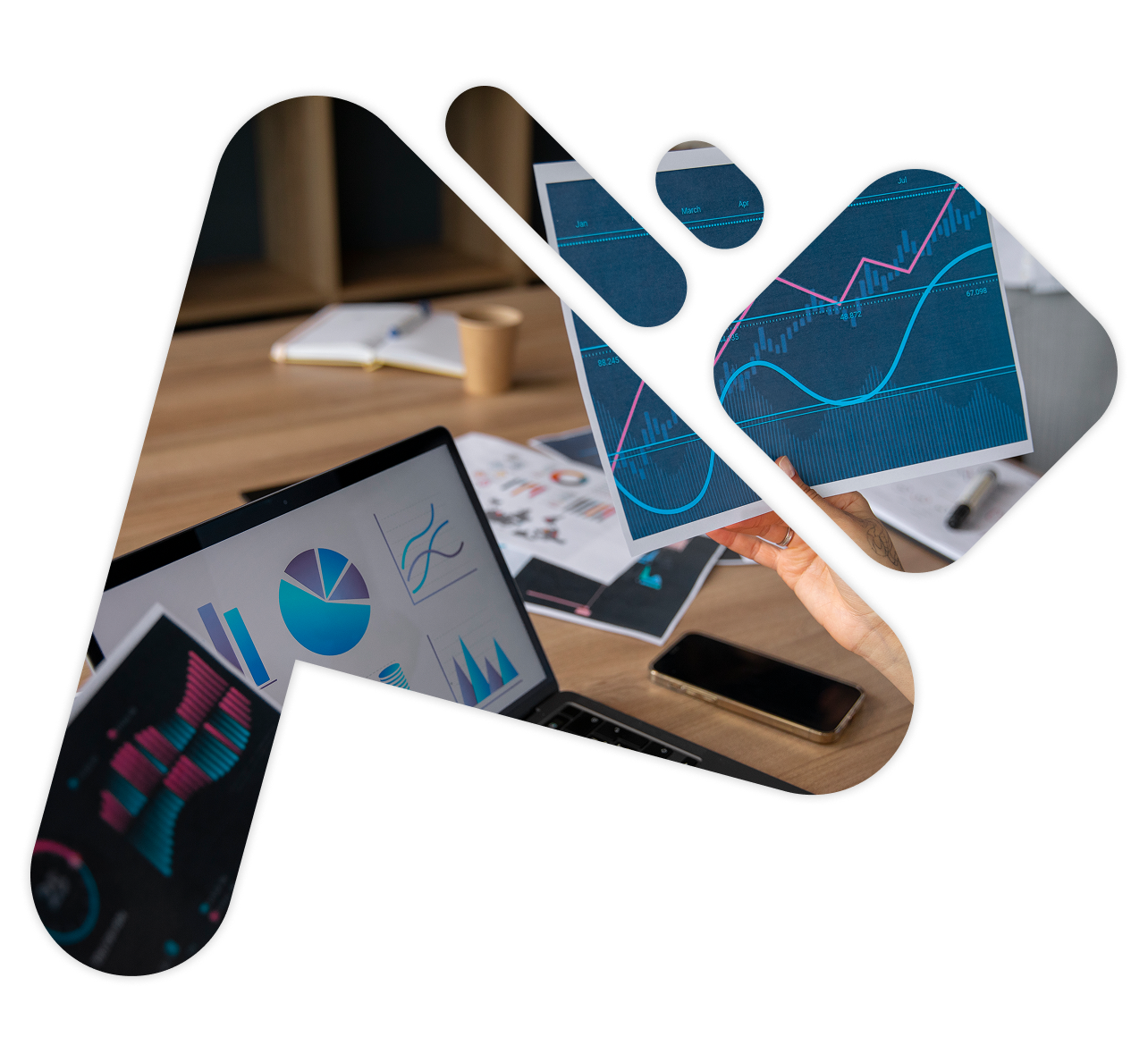
Analytics and BI
Thanks to consistent reports and indicators, the entire organization gains a single view of the business. Real-time analytics enable forecasting of sales, costs, and margins, which translates into better strategic and operational decisions.
Examples of applications:
▪️ real-time sales reports,
▪️ forecasting margins, costs, and revenues,
▪️ dashboards for various departments, from marketing to logistics.
The result: more accurate decisions made faster and based on reliable data.
Advanced analytics, ML & AI
Machine learning and artificial intelligence support retail companies in forecasting demand, managing inventory, and optimizing pricing in real time. Personalization of offers and automation of decisions increase customer loyalty and protect margins.
Examples of applications:
▪️ inventory forecasting based on weather, trends, and promotions,
▪️ real-time pricing in response to competitor actions,
▪️ personalization of offers based on customer behavior and LTV,
▪️ automatic detection of fraud and returns.
The result: higher margins, lower losses, and a better customer experience.
Data Model and Ontology
The data model and ontology create a common business language that organizes how information is stored and interpreted. This allows different departments and systems to view data in the same way, and AI can use it in a more precise and effective manner.
Examples of applications:
▪️ defining key indicators (e.g., sales, margin, LTV) in a single standard for the entire company,
▪️ organizing and describing data so that BI, ML, and GenAI systems use the same semantics,
▪️ facilitating the integration of new data sources and process automation.
Result: consistent “data truth” within the organization, greater reliability of analyses, and the ability to fully leverage AI for decision-making.
Remember that knowing data trends is an advantage in retail
Consumers expect consistent, tailored experiences that are available across all channels. Understanding trends allows you not only to respond to customer needs, but also to create new standards in the market.

Multi-channel
Customers buy and interact across multiple channels (web, mobile, marketplace, POS, social). If data from these sources is not tied together, you don’t see the full picture of your business and miss out on opportunities to increase sales.

Hyper-personalization
Segmentation is a thing of the past. Consumers expect offers and communication tailored precisely to them, based on their purchase history, behavior, and customer lifetime value (LTV). Without the use of AI and analytics, personalization ends with a name in a newsletter.

Seamless Omnichannel
Online and offline must work together, preferably in real time. In-app promotions should be visible at checkout, and the online shopping cart should be synchronized with the in-store offer. A lack of a seamless experience causes immediate frustration and cart abandonment.

Zero Customer
Today’s customers are not loyal. They easily switch brands and expect immediate responses and inspiration from every channel. Companies that fail to respond to this new behavior model quickly lose their competitive advantage.

See how we turn data into competitive advantage
Let’s talkWe share our
knowledge and experience


Why should you choose Alterdata?

Comprehensive services
We tailor our services to your needs, industry, and business model: start-up, e-commerce, or manufacturing.
We select services that will ensure high performance and low costs.

A team of professionals
Our engineers and data analysts have knowledge and years of experience in implementations for various industries.
We understand business, its requirements, and speak the same language as you.

Extensive tech stack
We use the latest and most efficient technologies from three leading cloud solution providers.
This allows us to build analytics platforms tailored to your needs.

End-to-end implementation
We select the KPIs and data sources that are most important for your business and clean up the information for analytics purposes.
We support you every step of the way so that you can fully exploit the potential of your data.

Data Security
We work in your environment and do not collect any data from it, which guarantees its security.
You decide what information we have access to during our work.
Data Team as a Service
We create a team with competencies tailored to the project. You choose the cooperation and billing model.
You use the service when you want, paying only for the time worked.
Turn your data into better decisions

Bartosz Szymański
Data Strategy and Customer Relations Director
Your data holds potential.
Ask us how to unlock it
FAQ
1. How does Alterdata support retail companies with data analytics?

Alterdata helps retail companies integrate sales, marketing, and operational data from multiple systems and channels, transforming it into actionable business insights.
2. What challenges in the retail industry does Alterdata solve?
Common challenges include fragmented data across physical stores, e-commerce, and POS systems, manual reporting, and inconsistent sales results. Alterdata removes data silos and automates reporting.
3. What data sources does Alterdata integrate for retail projects?
We integrate data from POS systems, e-commerce platforms, ERP, CRM, marketing tools, loyalty programs, and data warehouses, creating a centralized analytics environment.
4. How does Alterdata’s Business Intelligence support retail sales and operations?
We build BI dashboards that track sales, margins, product availability, inventory turnover, and promotion performance—both online and offline.
5. Can Alterdata analyze customer behavior and omnichannel journeys?
Yes. We develop customer journey models that combine online and offline data, helping retailers understand customer behavior, preferences, and omnichannel effectiveness.
6. Are Alterdata solutions scalable for large retail networks?
Absolutely. Our solutions are designed to scale across multiple locations, handle large data volumes, and support complex retail structures.