






Logistic
Our analytics include: early prediction of delays, reduction of delivery costs, and rapid operational decisions
Let’s talk
We empower leaders:










Change your data
for faster deliveries and lower costs
Proactive operational decisions instead of firefighting – risk prediction and real-time visibility enable operational teams to respond 24–72 hours in advance, before delays, congestion, or resource shortages impact the customer.
Controlling margins and profitability in volatile conditions – cost analysis and profitability prediction per relationship and order enable margin protection, better commercial decisions, and renegotiations before an order becomes unprofitable.
Scaling operations without increasing chaos – a single version of the truth about operational data, automation, and ML enable you to grow volumes without proportionally increasing your team and operational risk.
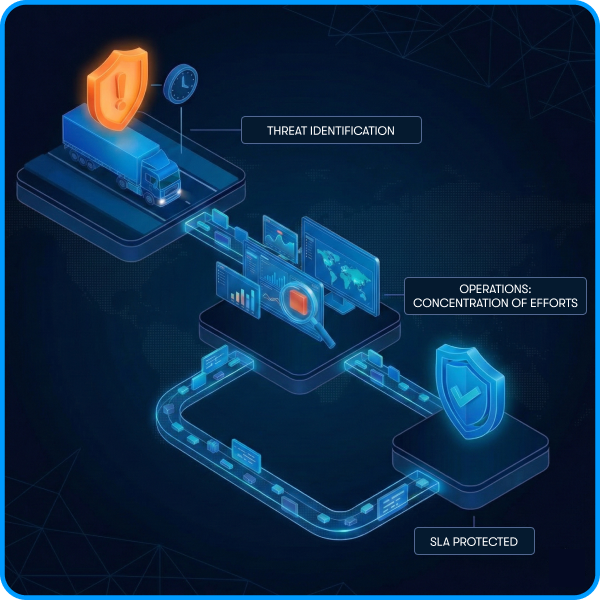
Use data to grow your business
Free consultationWe have proven solutions
for your company’s challenges
Prediction of delay risks (Early Warning)
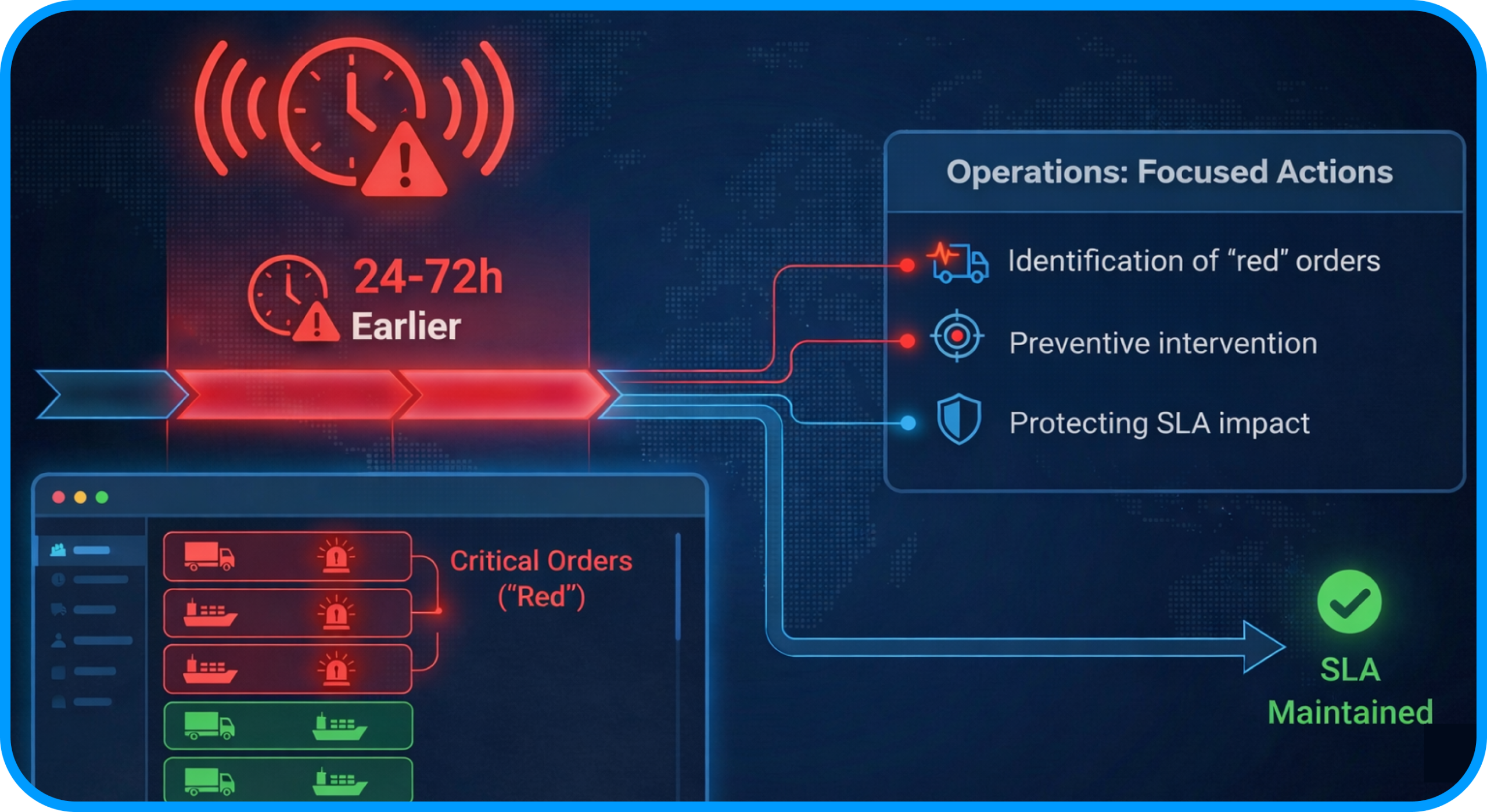
Prediction of delay risks (Early Warning)
The system identifies shipments at risk of delay up to 24–72 hours in advance. Operations know which orders are “red” and where to focus their efforts before the problem actually affects the SLA.
Profitability prediction before accepting an order
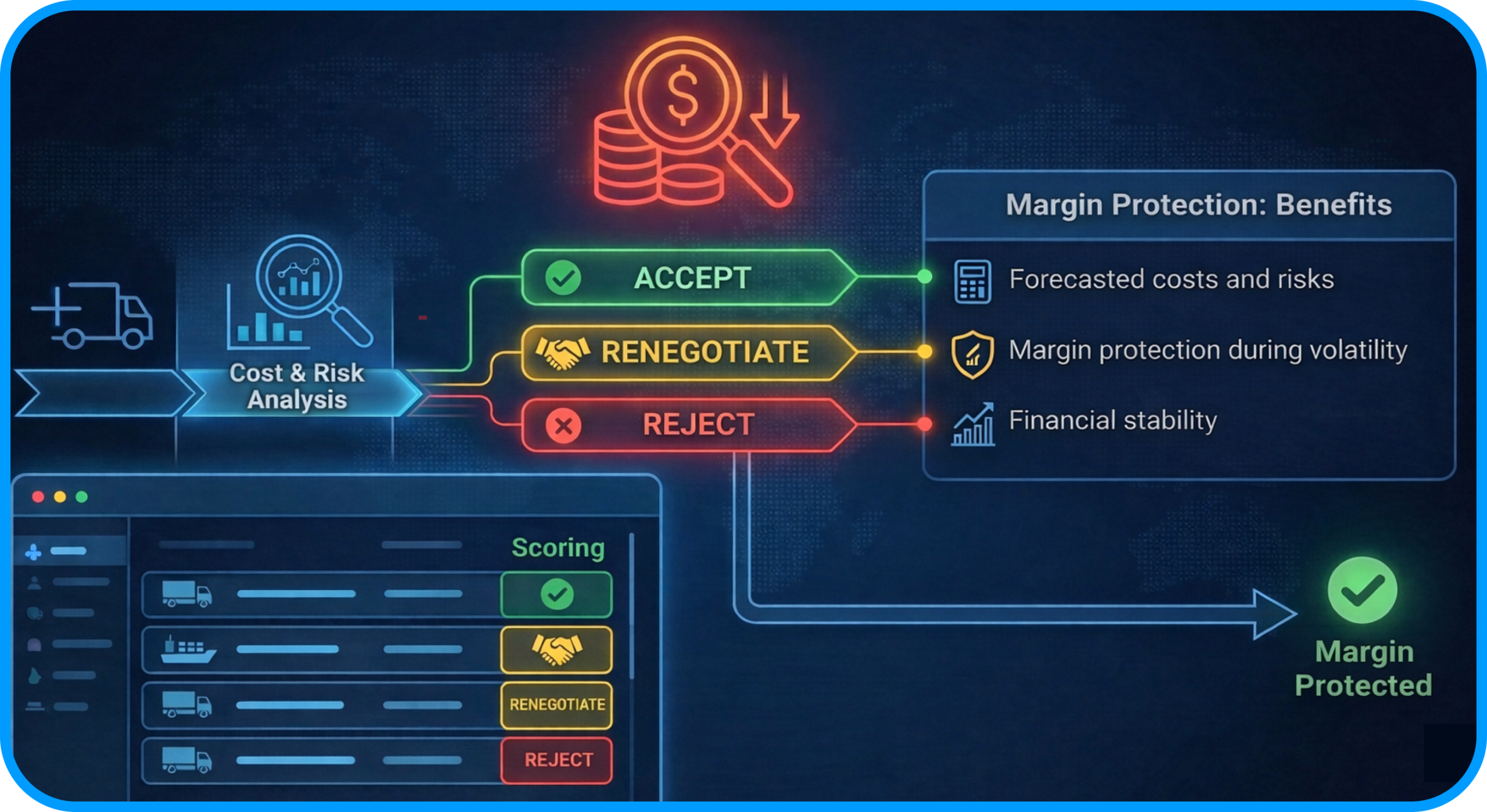
Profitability prediction before accepting an order
Each order receives a “take/renegotiate/don’t take” score based on projected costs and risks. This allows operators to protect their margins even when energy and service prices are highly volatile.
Resource availability prediction
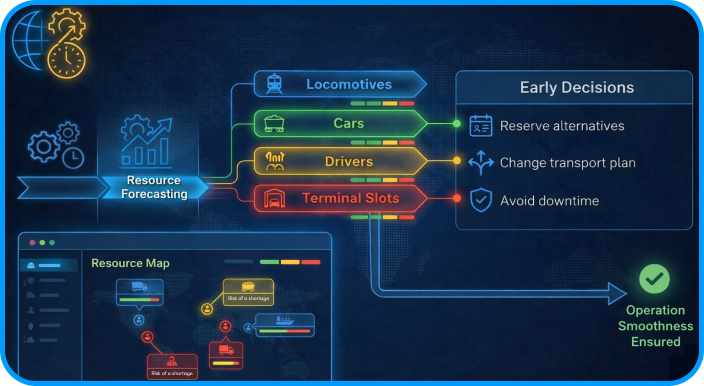
Resource availability prediction
The solution anticipates the risk of a shortage of locomotives, wagons, drivers, or terminal slots, enabling early decisions to be made about changing the transport plan or booking alternatives.
SLA risk scoring and proactive customer service
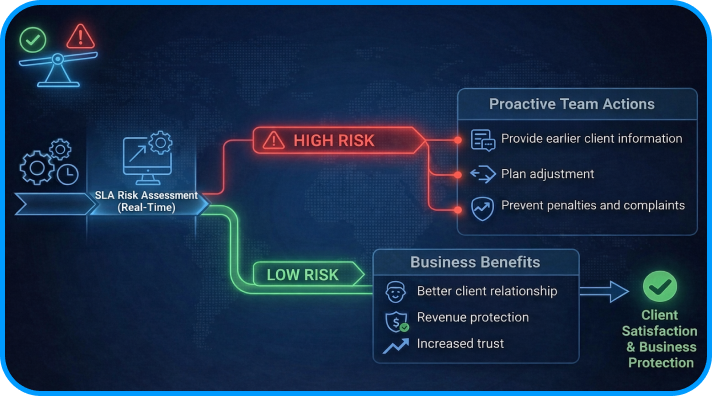
SLA risk scoring and proactive customer service
The system continuously assesses the risk of SLA non-compliance. Teams can notify the customer in advance, change the plan, or prevent penalties and complaints.
Custom CDC, the foundation of prediction and ML
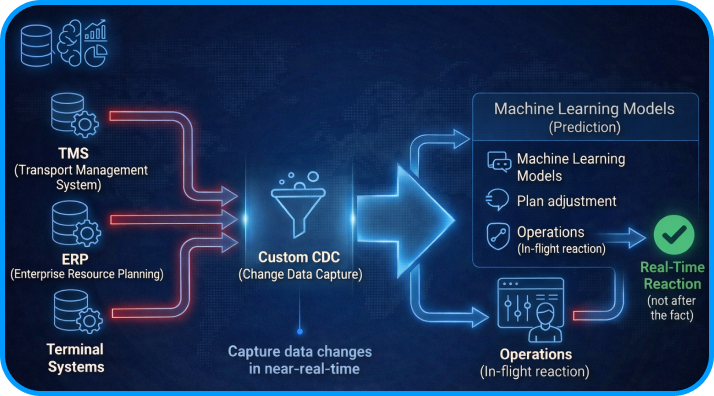
Custom CDC, the foundation of prediction and ML
We capture changes in TMS, ERP, and terminal systems in near-real-time. This allows ML models and operations to respond “during” transport, rather than to historical data after the fa
We share our
knowledge and experience




Why should you choose Alterdata?

Comprehensive services
We tailor our services to your needs, industry, and business model: start-up, e-commerce, or manufacturing.
We select services that will ensure high performance and low costs.

A team of professionals
Our engineers and data analysts have knowledge and years of experience in implementations for various industries.
We understand business, its requirements, and speak the same language as you.

Extensive tech stack
We use the latest and most efficient technologies from three leading cloud solution providers.
This allows us to build analytics platforms tailored to your needs.

End-to-end implementation
We select the KPIs and data sources that are most important for your business and clean up the information for analytics purposes.
We support you every step of the way so that you can fully exploit the potential of your data.

Data Security
We work in your environment and do not collect any data from it, which guarantees its security.
You decide what information we have access to during our work.
Data Team as a Service
We create a team with competencies tailored to the project. You choose the cooperation and billing model.
You use the service when you want, paying only for the time worked.
Turn your data into better decisions

Bartosz Szymański
Data Strategy and Customer Relations Director
Your data holds potential.
Ask us how to unlock it
FAQ
1. How does Alterdata support logistics companies in their work with data?

Alterdata helps logistics companies organize operational data, integrate it from various systems, and automate reporting. This allows operational and management teams to work with consistent, up-to-date data instead of manual reports.
2. What logistical problems does Alterdata help solve?
The most common problems include scattered data across multiple systems, manual reports in Excel, lack of a single source of truth, and limited visibility of operational processes. In the Loconi case study, we showed how organizing data can really streamline everyday work.
3. What systems and data sources does Alterdata integrate into logistics projects?
We integrate data from TMS, WMS, operating systems, ERP, financial systems, and report files, among others, creating a central analytical environment accessible to the entire organization.
4. How does reporting automation help operational teams?
Automatic reports eliminate manual work, reduce the risk of errors, and allow you to monitor key operational indicators such as timeliness, resource utilization, and process efficiency on an ongoing basis.
5. Does Alterdata assist in operational and management decision-making?
Yes. We build operational and management dashboards that enable quick response to problems, better resource planning, and decision-making based on current data.
6. Are Alterdata solutions suitable for logistics companies of different sizes?
Yes. We work with both regional logistics operators and larger companies in the TSL sector. We always tailor the scope of the solution to the scale of operations and maturity of the customer’s data.